


In projects utilizing aluminum profiles, the majority of risks stem not from the design—but from material deviations. Sometimes, that deviation is a mere 0.1mm. Though small, this discrepancy can trigger a chain of critical issues on-site:
- Mechanical assembly mismatch: Components fail to fit, forcing manual rework.
- Unexpected costs and delays: Construction schedules are pushed back, and budgets are overrun.
Consequently, manufacturing standards are no longer a “nice-to-have” but a decisive factor in project risk management. Currently, the two most prominent systems are JIS (Japan) and ISO (International). Where exactly does the difference lie?
JIS vs. ISO: Differing “Control Philosophies”
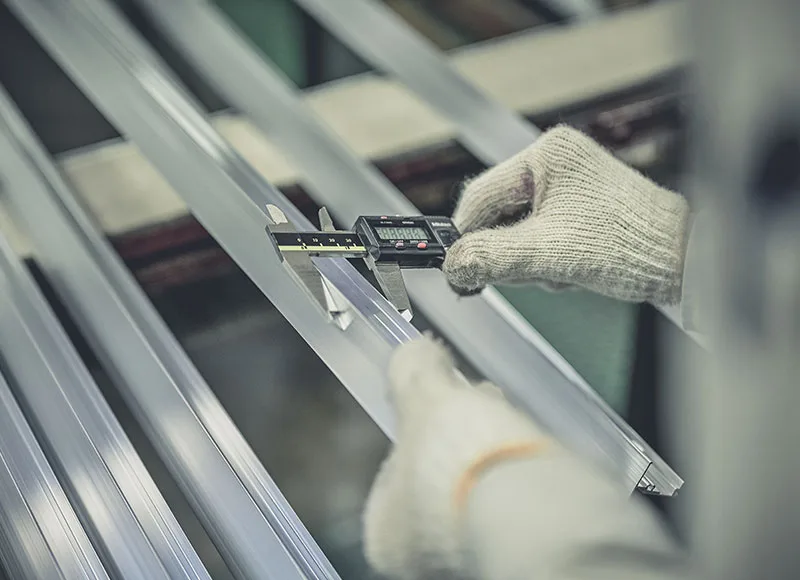
JIS (Japanese Industrial Standards) aims to control product quality down to every specific technical parameter. It is the mandatory benchmark for high-precision industries:
- Precision Engineering, Automotive, Electronics, Industrial Materials.
In short: JIS focuses on “whether the final product meets exact standards.”
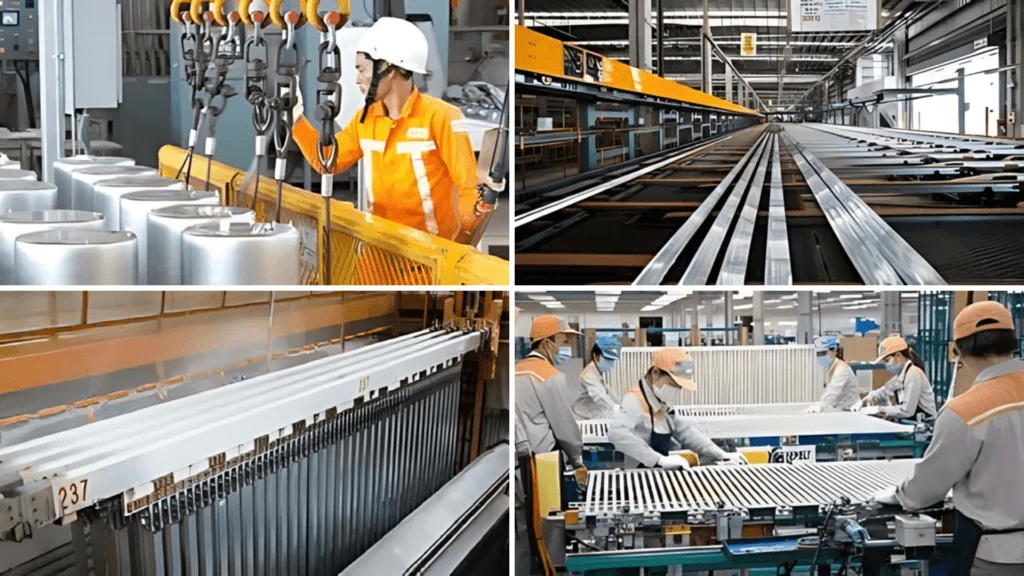
ISO (International Organization for Standardization) focuses on how a business organizes and operates its production:
- Quality Management Systems, Operational Processes, Consistency.
In short: ISO ensures the “business operates according to the correct processes.”
Core Differences in the Aluminum Industry
- Process Control vs. Product Control: ISO ensures the “method” is correct; JIS ensures the “final result” meets specifications.
- Technical Detailing: ISO provides a management framework, whereas JIS specifies concrete requirements for: Chemical composition, Mechanical strength, Dimensional tolerances. These are vital for error-free assembly.
- The Practical Gap in ISO: Many ISO-certified suppliers still face issues like material deformation or batch inconsistencies because ISO doesn’t deeply control physical parameters. JIS is specifically designed to fill this “risk gap.”
- Project Suitability: ISO is sufficient for general civil construction. However, JIS is indispensable for FDI projects, industrial plants, and harsh operating environments.
“Dual Assurance” at LIXIL VINA: Comprehensive Risk Control
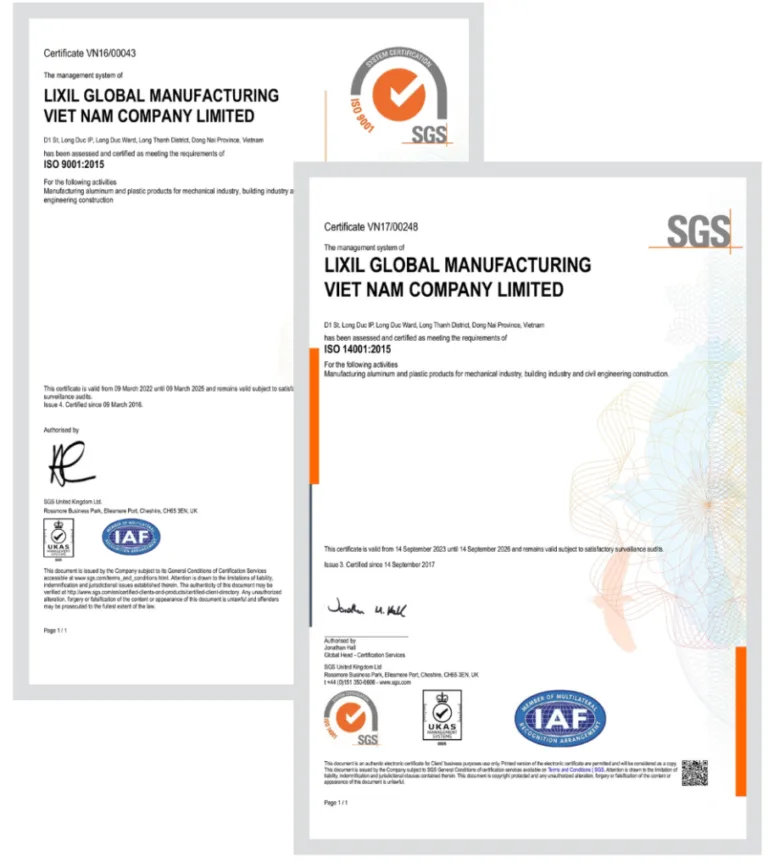
At LIXIL VINA, certifications are not just milestones—they represent our capability to manage practical risks for our clients through a combined system:
Stable Operational Foundation (ISO):
ISO 9001 & 14001 ensure consistent processes, minimize operational errors, and uphold environmental commitments.
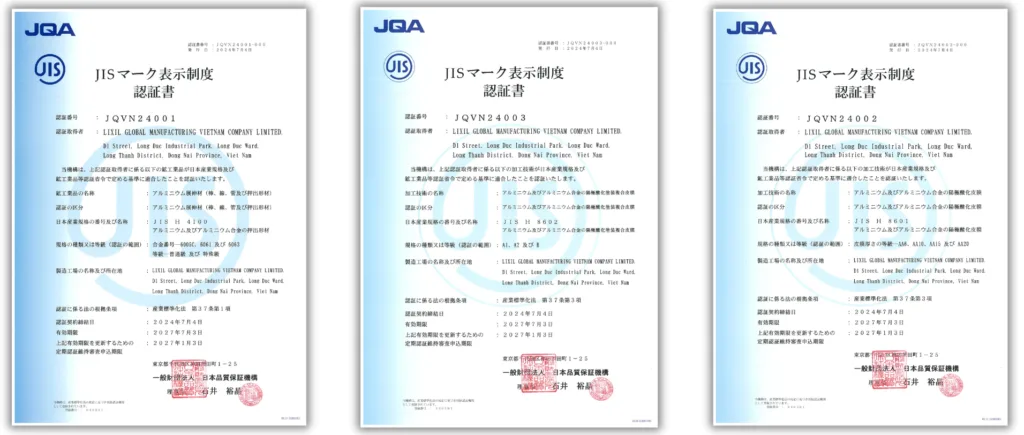
Precise Product Quality (JIS):
- JIS H4100: Standard for extruded aluminum profiles.
- JIS H8601 & H8602: Standards for surface treatment.
Strong guarantees on: High Precision – Long-term Durability – Superior Corrosion Resistance.
Conclusion
Choosing a supplier with both ISO and JIS is the most effective way to secure construction schedules and elevate project quality. If your project demands strict quality and on-time delivery, LIXIL VINA is your trusted partner.
Are you looking for aluminum solutions that meet international standards?
For projects where quality and delivery time are paramount, please contact LIXIL VINA.
Learn more: LIXIL VINA’s journey to achieving three JIS certifications